.CFNJLIS8_Z1nYImB.webp)
 4.9
4.9 If you’ve searched for “the best water filter for well water,” you’ve probably noticed there isn’t one clear answer - and that’s because there isn’t one product that fits every well. Well water varies enormously from property to property, even within the same neighborhood, so the right filtration setup depends entirely on what’s actually in your water. The good news is that once you know what you’re dealing with, matching a problem to a solution is fairly straightforward.
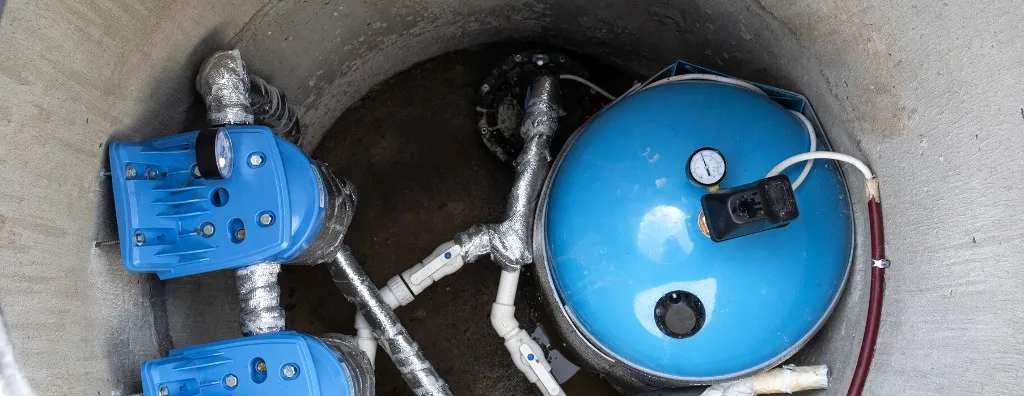
Every reliable well water guide starts with the same advice: test before you buy. A water test tells you whether you’re dealing with sediment, iron, hardness, bacteria, or some combination of the four, and buying a filtration system without that information is essentially a guess. (We cover what a standard well water test checks for in our well water testing guide.) Once you have results, here’s how the most common well water issues typically get addressed.
Sediment is one of the most common well water complaints: fine particles of sand, silt, or rust that show up as cloudy water or grit in your fixtures. A sediment filtration system is usually the first stage in any well water setup, since it’s typically installed at the point where water enters your home, before other treatment systems. Removing sediment early also protects the equipment downstream of it from unnecessary wear.
Iron and manganese are two of the most common well water issues, and each leaves its own telltale sign. Iron typically causes orange, rust-colored, or reddish-brown staining on fixtures, laundry, and toilets, while manganese causes black, gray, or dark brown staining instead - if you’re seeing both colors, it’s common to have both minerals present, and both tend to give water a metallic or bitter taste. Addressing iron and manganese usually requires filtration media specifically designed to remove them. A standard water softener won’t help here: it’s built to handle hardness minerals like calcium and magnesium, not iron or manganese, and a standard sediment or carbon filter alone often isn’t enough to handle higher concentrations either.
Hardness, meaning high calcium and magnesium content, is treated differently than filtration. Rather than filtering particles out, a water softener uses an ion-exchange process to reduce the minerals that cause scale buildup on fixtures, shorten the lifespan of water-using appliances, and leave soap and shampoo not lathering the way they should.
Because well water isn’t treated or monitored the way public water systems are, some wells, particularly those near agricultural land, septic systems, or other potential contamination sources, can carry bacteria or other microorganisms. Disinfection for this is typically handled separately from filtration, and any concern here should be confirmed with a water test rather than guesswork, since bacteria usually can’t be seen, tasted, or smelled.
For water that just doesn’t taste or smell quite right, or for households that want a broader layer of protection beyond addressing one specific issue, a whole-home water filtration system is usually the answer. These systems are designed to reduce a wider range of contaminants at every tap in the house, rather than targeting a single, specific problem. If your test shows something more serious, or you simply want the most thorough option available for the water you drink and cook with, reverse osmosis is the most complete choice. It’s typically installed at a single point of use, like the kitchen sink, and treats water by forcing it through a membrane rather than a standard filter cartridge, which allows it to address a broader range of dissolved contaminants than filtration alone.
If your test results show more than one issue, which is common, these systems are usually installed together rather than as a single stand-alone fix. A well with sediment and hardness, for example, typically needs both a sediment filter and a softener, since each one addresses a different problem. This is exactly why “the best water filter for well water” isn’t really a single product - it’s the right combination of systems for your specific results.
Redwood Pipe & Drain Inc helps well water homeowners throughout Santa Cruz County figure out which combination of systems actually fits their water - whole-home filtration, sediment filtration, water softening, or reverse osmosis for drinking water. If you have test results in hand and aren’t sure what they mean, or you already know you’re dealing with sediment, hardness, or general water quality concerns, we can help you find the right setup.
Call Redwood Pipe & Drain Inc at (831) 706-5620, or request service online.
Send us a message at:
info@redwoodpipeanddrain.com 4.9
4.9 Trusted by local homeowners and businesses for fast, reliable plumbing services-available when you need us most.