 4.9
Hard water means your water carries a high level of dissolved calcium and magnesium, and those minerals leave behind recognizable clues around the house. The most common signs of hard water are white spots on dishes and glassware, a white crust of scale on faucets and showerheads, soap scum and poor lather, stiff laundry, dry skin and dull hair, and mineral buildup in water-using appliances and pipes.
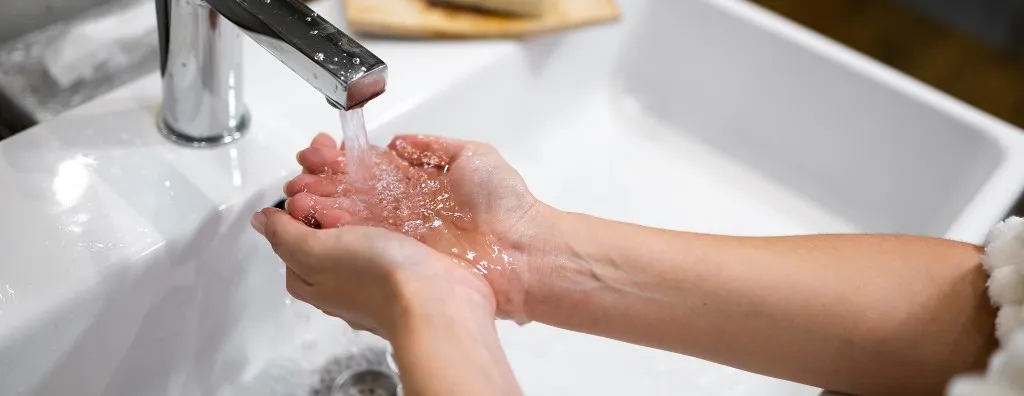
One of the clearest visual signs of hard water is white spotting or a cloudy film on glasses and dishes, even after they come out of the dishwasher. The spots are mineral deposits left behind when the water dries. They aren’t dangerous, and they don’t mean your dishes are dirty, but they are a reliable indicator that your water carries a lot of hardness minerals.
Scale is the white crust that forms when calcium carbonate drops out of hard water, and it forms fastest wherever water is heated or evaporates. If you see buildup around your faucets and showerheads, rings inside your kettle, or hard-to-clean limescale in the shower, hard water is the likely cause.
Hard water reacts with soap to form soap scum, which is why a ring can form in the tub and why soap and shampoo may struggle to lather. Because the minerals interfere with soap, you may also find yourself using more soap, shampoo, and detergent to get the same result. If your soap never seems to foam the way it should, hard water is a likely cause.
The same soap film that clings to your tub can cling to fabric, skin, and hair. Laundry washed in hard water can feel stiff or rough, and hard water can shorten the life of fabric. Soap that doesn’t rinse away cleanly can leave skin feeling dry or irritated and hair looking dull and hard to manage. These effects are about comfort rather than health, since hard water is generally not considered a health hazard.
Not every sign of hard water is visible. When hard water is heated, calcium and magnesium form scale that can build up inside water heaters and other water-using appliances, making them less efficient and contributing to earlier failure. Scale can also accumulate inside pipes and reduce water flow. If appliances seem to be wearing out sooner than expected, or water flow has dropped over time, hardness may be part of the picture.
Water hardness is typically reported in grains per gallon or milligrams per liter, and one grain per gallon equals 17.1 milligrams per liter. The U.S. Geological Survey classifies water as soft at 0 to 60 mg/L, moderately hard at 61 to 120 mg/L, hard at 121 to 180 mg/L, and very hard above 180 mg/L. The harder your water is, the more likely you are to notice the signs above. If you suspect hard water, a water test will tell you exactly how hard yours is.
A water softener is the system designed to address hardness. It uses ion exchange to swap calcium and magnesium for sodium or potassium as water passes through a resin tank, helping reduce scale buildup, protect water-using appliances, and improve the way soap and shampoo lather.
Common signs include white spots on dishes, scale on faucets and showerheads, soap scum, poor lather, and stiff laundry. A water test will tell you exactly how hard your water is, measured in grains per gallon or milligrams per liter.
Hard water is generally not considered a health hazard. The problems it causes are mostly practical, such as scale buildup, extra soap use, and wear on water-using appliances. (For drinking-water safety and contaminants, see is tap water safe to drink.)
Hard water carries high levels of dissolved calcium and magnesium, while soft water carries little. On the USGS scale, water at 60 mg/L or below is considered soft, and water above 180 mg/L is considered very hard.
A water softener reduces the calcium and magnesium that cause hardness through a process called ion exchange.
Redwood Pipe & Drain Inc installs water softeners for homeowners throughout Santa Cruz County. If you’re seeing signs of hard water at home and want to know whether a softener is the right fit, we can help you figure out the best setup for your water.
Call Redwood Pipe & Drain Inc at (831) 706-5620, or request service online.
Send us a message at:
info@redwoodpipeanddrain.com 4.9
Trusted by local homeowners and businesses for fast, reliable plumbing services-available when you need us most.