.CFNJLIS8_Z1nYImB.webp)
 4.9
4.9 Water softeners and water filters often get lumped together, and it’s easy to see why: both improve the water in your home, and both are sold as ways to get “better water.” But they solve two different problems, and neither one can stand in for the other.
A water softener targets hardness, which means high levels of calcium and magnesium in your water. It works through ion exchange, swapping those hardness minerals for sodium or potassium ions as water passes through a resin tank, and it is typically installed to treat the water supply for the whole home. The signs of hard water are usually easy to spot: limescale on fixtures, white spotting on dishes, dull laundry, and dry skin. What a softener does not do is remove sediment or bacteria from your water. It changes the mineral makeup of the water, but it isn’t a filter.
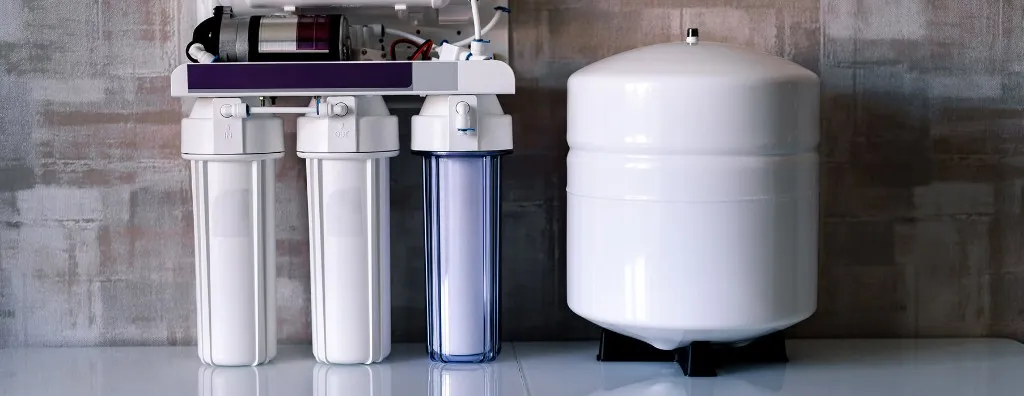
“Water filter” is a broader category than “water softener,” because different filters are built to catch different things. Depending on the type, a filter can reduce sediment, chlorine, unpleasant taste and odor, and certain contaminants such as heavy metals. Some filters are installed where water enters the home to treat every tap, while others treat a single tap, like the kitchen sink. What a filter does not do is soften water. Filtered water isn’t necessarily soft water, so a filter won’t prevent limescale or the other effects of hardness.
The upkeep for each system looks different. A softener needs its salt or potassium chloride supply refilled on a regular basis, along with occasional care for the brine tank. A filter needs its cartridges or media replaced periodically, and how often depends on the type of filter and the condition of your water. Either way, regular maintenance is what keeps each system working the way it should.
It comes down to what your water is doing. If your main problem is hardness, with scale buildup, spotted dishes, or dry skin, a water softener is the system that addresses it. If your concern is taste, odor, chlorine, sediment, or a specific contaminant, a water filtration system is the better fit. If you’re dealing with both, you’ll need both, since neither one does the other’s job.
When both are installed together, the order matters, and the right order depends on your water and your equipment. A sediment filter is often placed ahead of a softener to protect it, while in some setups the softener comes first to keep scale from building up on other filter media. A water test is the best way to find out which problems you actually have, and a professional can recommend how the system should be arranged for your home.
Redwood Pipe & Drain Inc installs both water softeners and water filtration systems for homeowners throughout Santa Cruz County. If you’re not sure whether your home needs a softener, a filter, or both, we can help you work out the right setup based on what’s actually in your water.
Call Redwood Pipe & Drain Inc at (831) 706-5620, or request service online.
Send us a message at:
info@redwoodpipeanddrain.com 4.9
4.9 Trusted by local homeowners and businesses for fast, reliable plumbing services-available when you need us most.