.CFNJLIS8_Z1nYImB.webp)
 4.9
4.9 If your well water carries sand, silt, or grit, a sediment filter is usually the first and most basic line of defense. It’s a simple concept, but there are a few real decisions to make once you dig into it: which type of filter fits your situation, what micron rating actually means, and how much upkeep to expect.
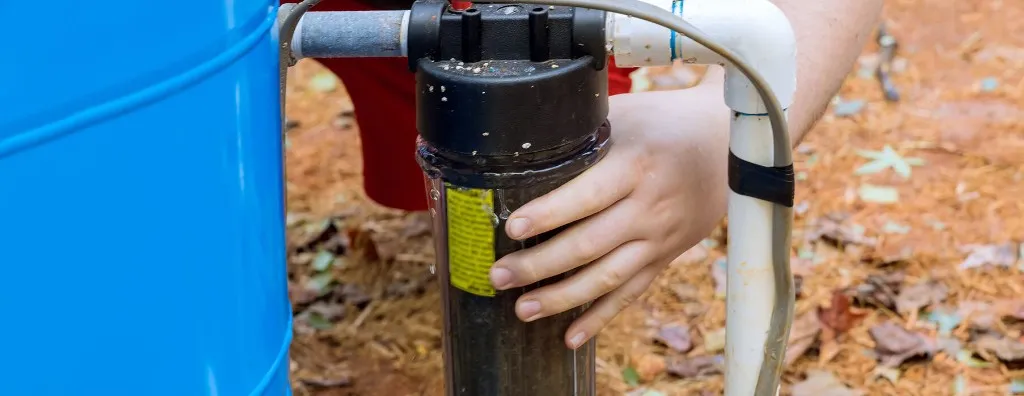
There are two main types of sediment filters used in well water systems, and they work in very different ways. A spin-down filter uses centrifugal force: as water enters the housing, it spins, throwing heavier particles like sand and grit outward into a collection chamber. You maintain it by simply opening a flush valve to drain out what’s collected, with no components to replace. It’s a low-maintenance option, but it only catches relatively coarse particles and won’t stop fine silt or cloudiness.
A cartridge filter works differently. Water passes through a replaceable cartridge, made from pleated, wound, or melt-blown material, which physically traps particles as the water moves through it. Cartridges come in a wide range of micron ratings, so they can be chosen to catch much finer particles than a spin-down filter can. The tradeoff is that the cartridge gradually clogs as it collects sediment and needs to be replaced periodically, rather than simply flushed clean.
Because each type has a different strength, many well water systems use both together: a spin-down filter to catch the heavier, coarser sediment first, followed by a finer cartridge filter to polish out what’s left. This staged approach also helps the cartridge last longer, since it isn’t doing all the work on its own.
A micron rating describes the size of the particles a filter can catch, and the lower the number, the finer the filtration. For general whole-house sediment removal, a 20 to 50 micron filter is typical. If water is heading toward more sensitive equipment, such as a reverse osmosis system, a much finer filter, often in the 1 to 5 micron range, is used to protect that equipment from fine particles that a coarser filter would let through. As a general rule, it’s better to start with a coarser filter and step down in stages if needed, rather than installing the finest filter available right away, since an overly fine filter clogs faster and can reduce water pressure more quickly.
Cartridge filters typically need replacement every one to six months, depending on how much sediment your well produces. Wells with heavy sediment loads may need monthly changes, while wells with lighter sediment can often go four to six months between replacements. A noticeable drop in water pressure is usually the clearest sign a cartridge has clogged and needs to be swapped out. Spin-down filters don’t need replacing the same way, but they do need periodic flushing, often on a monthly basis, to clear out what’s collected in the chamber.
It’s worth being clear about what sediment filtration does and doesn’t address. A sediment filter is designed to catch physical particles, such as sand, silt, and similar debris, not dissolved minerals or other water quality issues. Iron is a good example: a sediment filter will catch iron that has already oxidized into visible reddish particles, but it won’t remove iron that’s still dissolved in the water. Dissolved iron, along with manganese, hardness, or bacteria, needs its own dedicated treatment. If you’re dealing with staining, odor, or a metallic taste in addition to grit or cloudiness, sediment filtration alone typically isn’t the full answer, and a water test is the best way to find out exactly what else might be going on. (For how sediment fits into a broader well water setup, see our guide to choosing the right filter for well water.)
Redwood Pipe & Drain Inc installs and services sediment filtration systems for well water homeowners throughout Santa Cruz County. If you’re dealing with cloudy water, grit in your fixtures, or you’re not sure whether sediment filtration alone will solve what you’re seeing, we can help you figure out the right setup for your well.
Call Redwood Pipe & Drain Inc at (831) 706-5620, or request service online.
Send us a message at:
info@redwoodpipeanddrain.com 4.9
4.9 Trusted by local homeowners and businesses for fast, reliable plumbing services-available when you need us most.